The Working Hand Wore It First: Planning a Manicure Around Your Real Grip

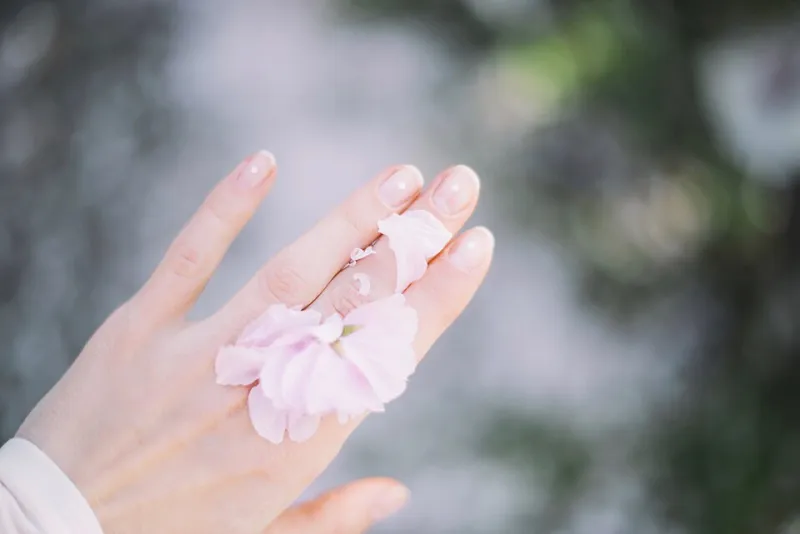
Photo: Shixart1985, CC BY 2.0, via Wikimedia Commons
There’s a quiet moment in every salon appointment when the two hands go on the table and suddenly look like they’ve lived different lives. One is smooth, careful, maybe a little smug. The other has a chip near the tip, a slightly flatter apex and the general air of someone who has been opening parcels with their thumbnail since Tuesday. That’s not a failure of aftercare. It’s just the dominant hand doing its job.
Most of us have a working hand and a supporting hand, and they don’t experience the same fortnight. The working hand reaches for the kettle, hooks the car door, taps the contactless reader, unclips the seatbelt, carries the shopping and does the lion’s share of hair-washing. The supporting hand holds, steadies and generally gets an easier ride. If your manicure is planned as though both hands are identical, the working hand will always be the first to look tired.
It’s Not Bad Luck, It’s Load-Bearing
A chip on the dominant hand is rarely a mystery. It’s usually the result of repeated small stresses: pressure at the free edge, moisture from washing up, a nail used as a tool because the proper one was across the room. Gel and BIAB are tough, but they’re not armour. They flex with the nail, and the nail flexes with the hand. The hand that grips, twists and opens things will always ask more of the product.
This is why a good nail tech will often ask which hand is dominant before they start shaping. It’s not idle chat. It changes the brief. The working hand might need a slightly shorter length, a softer corner or a bit more structure through the stress area. The non-dominant hand can often carry more length, a sharper shape or the more detailed nail art without the same daily wear and tear.
Shape and Length: A Two-Handed Approach
A balanced set doesn’t have to mean identical hands. In fact, many clients are happier with a subtle difference once they’ve tried it. For the dominant hand, consider keeping the length just a millimetre or two shorter than you would normally. Ask for softened corners rather than a sharp square or stiletto, especially if you type, drive or spend your day on a keyboard. A gentle almond or rounded square can still look polished without giving the free edge a built-in catch point.
If you love a long, elegant shape, you don’t have to give it up entirely. Ask your tech whether they can build a little more strength into the working hand while keeping the non-dominant hand lighter and more flexible. The goal is not to make one hand look different from the other — it’s to make both last the same amount of time. A good salon will understand that a manicure is a working wardrobe, not a display piece.
Where the Art Goes Matters
Nail art placement is another place where the dominant hand deserves a rethink. Fine linework, tiny gems and delicate chrome details are lovely, but they don’t all belong on the hand that does the heavy lifting. If you want the art to survive, put the more intricate design on the non-dominant hand, or keep the dominant hand’s accent simpler and lower down the nail.
That doesn’t mean the working hand has to be boring. A single swipe of colour, a soft French tip or a subtle magnetic sheen can look just as considered as a full set of hand-painted florals. The trick is to match the detail to the job. If you’re right-handed and you spend your days typing, a delicate charm on your right index finger is essentially a tiny countdown to a snag. Save the charm for the hand that spends more time holding a mug.
The Brief Your Nail Tech Actually Needs
You don’t need to arrive with a technical diagram. A few honest sentences are enough. Tell your tech which hand is dominant, what you do with your hands and what usually goes wrong first. Do you chip the tips? Lift near the cuticle? Snap a corner opening a cupboard? That information is more useful than a photo from a trend feed.
It also helps to mention the small stuff: the gym, the dishwasher, the contact lenses, the toddler, the daily commute. A nail tech can adjust the structure, the length and even the aftercare advice around your actual week. If you’re hard on your hands, they might suggest a slightly more robust base, a gentler shape or a different top coat. If you’re careful but your job involves constant hand-washing, they might focus on cuticle care and flexibility instead.
Small Habits for the Working Hand
The biggest difference between a manicure that lasts ten days and one that lasts fourteen is often not the salon — it’s the tiny habits in between. Keep a pair of gloves by the washing-up liquid. Use the pad of your finger, not the tip, to open cans and press buttons. Keep a nail file in your bag for the moment a corner catches, rather than waiting for it to tear. And oil, oil, oil. A drop of cuticle oil after hand-washing is a small ritual that pays off on both hands, but especially the one doing the work.
If a chip does appear, don’t pick at it. A quick message to the salon is usually better than a DIY repair that takes half the top layer with it. Many UK salons will happily slot in a short repair appointment, and it’s far less disruptive than waiting for the whole nail to lift.
The Full Fortnight Is a Two-Handed Plan
A manicure shouldn’t ask your dominant hand to pretend it’s not dominant. The best sets are the ones that work with your grip, your commute and your very normal habit of using your thumbnail as a tiny screwdriver. So next time you book, take both hands seriously. Tell your tech which one does the heavy lifting, ask for a shape and length that suit it, and let the other hand have a little more fun. That’s not a compromise. It’s just a smarter way to wear polish in 2026.