Day Ten Is the Real Test: How to Choose a Nail Shape for Your Actual Week
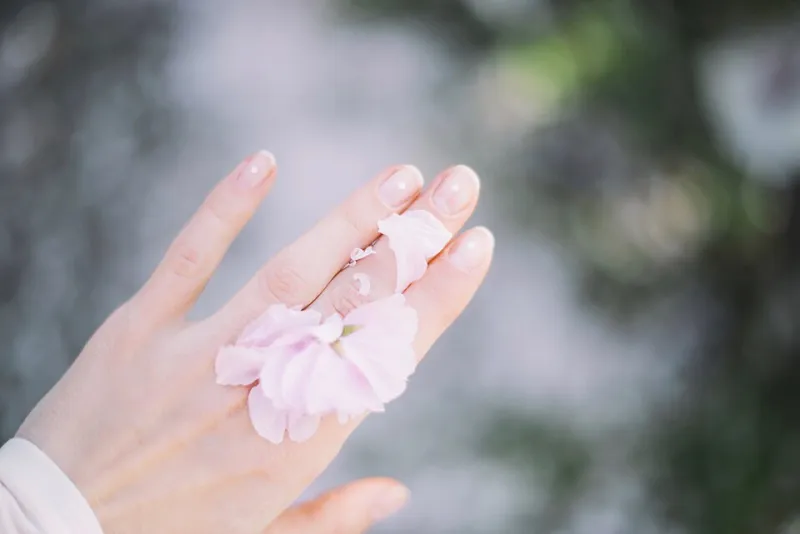
Photo: Roman Kraft romankraft, CC0, via Wikimedia Commons
Most shape conversations start with a screenshot. You scroll, you save something elegant, you bring it in, and your nail tech does their best to translate a heavily filtered close-up into something that will live on your actual hands. It is a lovely starting point, but it is not the whole story. The better question is simpler: what does your week ask of your nails?
A shape is not just a silhouette. It changes where pressure lands, how the free edge behaves and how obvious a tiny chip becomes. Day one is for photographs. Day ten is for the truth.
Start with your week, not the grid
Before you decide between square and almond, run through the ordinary things your hands do. Are you typing for most of the day? Do you grip a train handle with your fingertips? Are you washing up without gloves because the marigolds are somewhere under the sink? Do you wrestle with seatbelts, hair ties, dog leads and parcel tape? Do you spend December in thick gloves and January with the central heating on full blast?
None of these things rule out a particular shape. They simply tell you where to be realistic. If your nails take a lot of side-on pressure, a very sharp corner may become a snag point. If you are used to short nails, a long almond is not a neutral change — it alters how you pick up keys and tap a card machine. The shape that suits your life is the one you are not constantly negotiating with.
The four staples, in plain English
Square is the crisp one. It keeps a straight sidewall and a flat free edge, which can look very neat on broader nail beds and shorter lengths. It is strong through the middle, but the corners are the ones doing the hard work when you catch a keyboard edge or reach into a bag. If you love the look but keep snagging, ask for the corners softened rather than abandoning the shape altogether.
Squoval is the peacekeeper. It is essentially a square with the sharp points taken off, so you keep the tidy width but lose the most vulnerable bits. For lots of clients it is the easiest first step away from a plain square, and it behaves well through typing, washing-up and general admin. It rarely looks fussy, which is why it quietly suits so many hands.
Oval follows the natural curve of the finger and tapers gently at the tip. It is flattering on shorter nails and can make narrow nail beds look more balanced. Because there are no corners to catch, it often feels calmer through a busy week. The trade-off is that it can look grown-out a little sooner, especially if you like a very crisp edge.
Almond is the elongated tapered shape with a soft point. It is beautiful, but it asks for a bit more length and a bit more care. The tip is the stress point, so if you are heavy-handed with car doors, gym equipment or a weekly deep clean, it may need more maintenance than you fancy. That does not make it impractical — it just makes it a shape to choose deliberately, not absent-mindedly.
Strength is a conversation, not a silhouette
It is tempting to believe that one shape is inherently strong and another is inherently fragile. In reality, strength comes from the whole structure: the apex, the sidewalls, the amount of free edge, the product and how well it is applied to your nail. A short almond can be perfectly sturdy. A square can still chip if the corners are too sharp or the free edge is too long for the way you use your hands.
So when you sit down at the table, do not just point at a picture. Tell your tech what you have noticed. Phrases like ‘I keep catching the corners on my keyboard’, ‘I want to keep the width but not the sharp points’ or ‘I love almond but I need it short enough for gardening’ are far more useful than a screenshot alone. Good nail techs are translators. Give them the behaviour, not just the aesthetic.
How to brief without the Instagram performance
You do not need a mood board to get what you want. A few everyday descriptions go a long way. ‘Short but not stubby.’ ‘Straight sides, soft corners.’ ‘A gentle taper, nothing too pointy.’ ‘Enough free edge to look deliberate, not enough to get in the way.’ These are real, useful instructions.
If you do bring a photo, say what you like about it. Is it the width? The taper? The matte finish? The fact that the tip is rounded rather than square? A picture can show a shape, but it cannot explain which part you actually want to live with. The best brief is a mix of visual reference and honest information about your hands.
The cold-weather factor
From late autumn onwards, shape becomes a hand-care issue as much as a style one. Dry cuticles, chapped skin and central heating can make any shape look rougher than it is. Shorter squoval and oval shapes tend to feel more practical when you are pulling on gloves, gripping a hot mug and wrestling with a scarf. Almond can still work beautifully, but keep an eye on the tip and do not let the free edge get too long before your next appointment. A little cuticle balm and a hand cream by the sink will do more for the finished look than a last-minute reshape.
The day-ten check
When you are close to your next appointment, have a proper look. Where has the product worn? Are the corners snagging? Is the tip bending or feeling vulnerable? Has the shape grown out in a way that makes your fingers look shorter than you expected? That information is gold for next time. It tells your tech whether to soften a corner, shorten the free edge, adjust the taper or change the structure underneath.
The best shape is not the one that gets the most likes. It is the one that still feels like you on day ten, when the novelty has gone and the washing-up has not. Choose for your hands, brief in your own words, and let the shape earn its place in your week.