Before the First Coat: What UK Nail Salons Should Be Telling You About Product Sensitivity
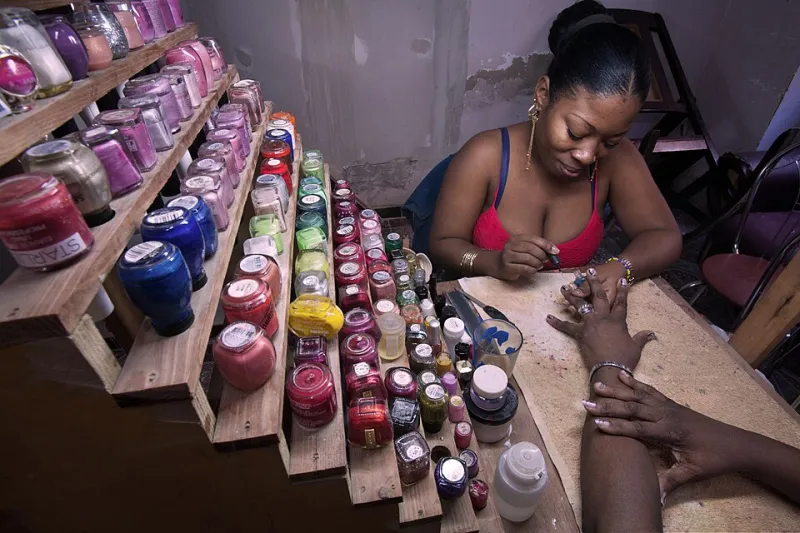
Photo: Jorge Royan, CC BY-SA 3.0, via Wikimedia Commons
Walk into a good nail salon in 2026 and you will still see the familiar rituals: the colour wall, the little dish of cuticle oil, the chat about holidays and weather. But there is another conversation happening more often now, usually before the first file touches the nail. Clients want to know what is in the bottle, how the room is ventilated and whether a patch test is part of the service. It is not suspicion for its own sake. It is the natural next step for a beauty category that has become more technical, more ingredient-aware and, frankly, more crowded with options.
Why the questions have changed
For years, gel polish, BIAB and builder gels were sold mostly on finish and longevity. That is still true, but the conversation has widened. Clients are more likely to have read about methacrylate allergies, more likely to know someone who had a reaction, and more likely to ask whether a product is HEMA-free before they sit down. Social media has played a part, but so has experience. People are having nail services more regularly, trying more products and paying closer attention to how their nails and skin respond.
That is a healthy shift. A salon service should not feel like a mystery box. The best nail techs are not threatened by product questions; they are used to them. They know their brands, they understand the difference between a base coat and a builder gel, and they can explain why one product might suit a client better than another. In 2026, that kind of knowledge is part of the service, not an optional extra.
HEMA, methacrylates and plain English
HEMA — hydroxyethyl methacrylate — is a methacrylate monomer found in some gel polishes, base coats and nail adhesives. Methacrylates are a family of chemicals that cure hard under UV or LED light. They are useful. They are also recognised allergens, and repeated exposure can lead to sensitisation. That means an allergy can develop over time, even if a product has never caused a problem before. Once someone is sensitised, reactions can be persistent and may affect future treatments, including dental and medical procedures that use related materials. This is why the issue matters beyond the nail world.
A responsible salon should not promise that any product is chemical-free or allergy-proof. No credible salon can. What it can do is know its brands, keep safety data sheets, explain which products contain HEMA or other methacrylates, and offer alternatives where possible. If a salon stocks a HEMA-free line, it should be able to say which services it covers and whether the removal products match. Vague reassurance is not the same as transparency.
What a responsible salon discloses
Product transparency does not need to be a lecture. It can be a short, clear consultation. A good salon should be able to tell you the brand and product name being used, provide an ingredient list or safety data sheet on request, explain whether a patch test is required or recommended, and talk through ventilation and removal methods. It should also ask about your history: previous reactions, eczema, psoriasis, sensitive skin, allergies to adhesives or dental materials, and any medication that affects your skin.
That information should not be treated as an inconvenience. It is how a professional decides whether to proceed, patch test, switch products or suggest a different service altogether. A salon that brushes off questions with a cheerful it is all natural is not giving you the full picture. Natural ingredients can still cause reactions, and synthetic ingredients are not automatically unsafe. The point is informed choice, not fear.
Patch tests: a screening tool, not a guarantee
Patch tests are not a universal legal requirement for every nail service in the UK, and policies vary from salon to salon. But for clients with a history of sensitivity, eczema, psoriasis or previous reactions to gels or adhesives, they are a sensible step. A salon might ask you to come in 48 hours before your first appointment so a small amount of product can be applied and checked. It is not a perfect test, and it does not replace medical advice, but it gives both you and your tech useful information.
If a salon dismisses patch tests as unnecessary for everyone, ask why. If it offers them only when needed, ask how it decides. The answer should be clear and consistent. A patch test is not a box-ticking exercise; it is a chance to spot a problem before it becomes a painful surprise. It also sets the tone for the rest of the appointment: we are paying attention, and we want this to work for you.
Ventilation is part of the service
Product transparency is not only about ingredients. The room matters too. Nail work can produce dust, vapours and fine particles, especially during filing and removal. Good ventilation means local extraction at the desk, filters that are maintained, and a room that does not smell like a perfume counter covering something else. A scented candle is not ventilation. If you are sensitive to smells or have asthma, ask about extraction before you book. A salon that can answer clearly is a salon that has thought about the working environment, not just the Instagram grid.
Aftercare and the honest conversation
Aftercare is where transparency becomes practical. A polished service should include clear advice on curing, cuticle oil, avoiding picking, and removing product safely. Forced removal — prying, peeling or soaking in acetone for too long — can damage the nail plate and make future appointments harder. If you notice itching, redness, swelling or a burning sensation during or after a service, tell the salon and seek advice from a pharmacist or GP. Do not simply paint over it. A good tech will want to know.
Red flags and good signs
Red flags include vague answers about brands, no ingredient information, dismissal of patch tests, poor ventilation, pressure to ignore a reaction, and claims that a product is natural and therefore risk-free. Good signs include a consultation that asks about allergies and previous treatments, clear product names, safety data available, a patch-test policy, extraction at the desk, and aftercare advice that does not stop at the till.
The trust dividend
Transparency used to feel like an awkward extra step, as if asking for an ingredient list implied distrust. In 2026, it reads differently. It is a mark of a salon that knows its craft and respects its clients. The best appointments still feel relaxed — a chat, a colour, a neat finish — but the relaxed feeling is built on clear answers. That is the pact: you ask, they tell you, and together you choose a service that suits your nails, your history and your plans. Polished nails are lovely. Polished nails with informed care are better.