The Chat Before the Colour: How to Brief Your Nail Tech Like a Pro
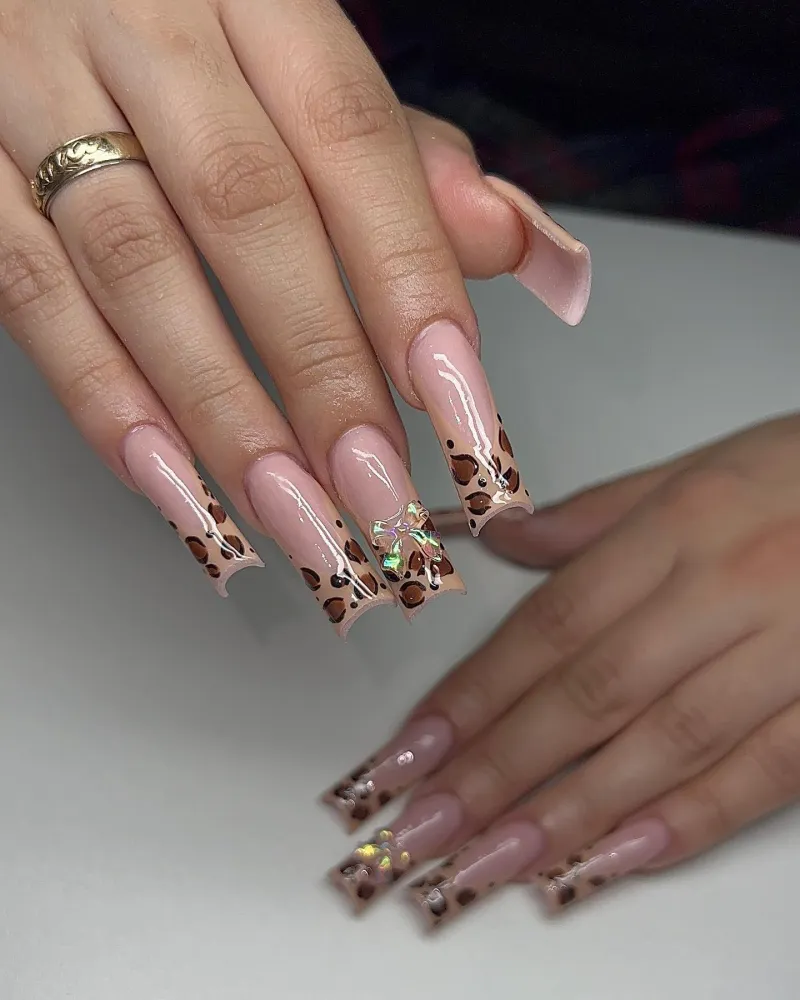
Photo: nail salon consultation technician showing colour swatches to client natural light close up hands, via alexie.co
The five minutes before the file comes out are, quietly, the most useful part of any nail appointment. It's the bit where you and your technician work out what you're actually getting, and yet it's also the bit most of us rush, mumble through, or skip entirely because we don't want to be a nuisance.
There's a particular British reluctance to being specific. We say 'just a tidy-up' when we mean 'a shorter squoval with a sheer nude'. We nod along at a colour we're not sure about because the swatch looked different under the salon lights. Then we get home, look at our hands under the kitchen spotlights and think, ah. That's not quite it.
Here's the thing: a good consultation isn't a complaint. It's a brief. And like any brief, the more clearly you give it, the better the result. Nobody expects you to arrive with technical vocabulary — but a few well-chosen words will get you much closer to the manicure in your head.
Start with the shape, not the colour
Almost everyone opens with colour. Try flipping it. Shape and length change how your hands look far more than a shade does, and they're much harder to fix once the extensions are on.
You don't need to know every term, but these are worth having in your pocket: round, square, squoval (square with softened corners), oval, almond and coffin (also called ballerina). If you can't name what you want, a photo does the job in seconds — and don't just show an influencer's hand, show it and say what you like about it. 'I like how tapered this is, but I want mine shorter' is a genuinely useful sentence.
One more tip: point at your own finger. 'About two millimetres past the fingertip' is more reliable than 'a bit longer'. Ask your tech to rough the shape out before they commit — most will happily do this, and it's far easier to take a millimetre off than to add one back.
Be honest about length and real life
This is where the good stuff happens. Your manicure has to survive your actual week, not a photoshoot. Mention if you're typing all day, wearing contact lenses, wrangling small children, doing a gym class three times a week, walking a strong-willed dog, playing netball on Sundays, or hauling a cello around.
A long almond might be the dream, but on hands that live in and out of water, a shorter shape with a reinforced apex will look better for longer. Your technician can only advise on that if they know. Say the words: 'I'm quite hard on my hands, what would you recommend?'
Talk colour in a way that actually helps
Swatches look different on a plastic stick than they do on your nail, and different again under the strip lights. Ask to see two or three painted onto your own nails, then step towards the window. Daylight is honest; salon lighting is flattering.
Other useful things to mention: whether you want sheer or opaque, how many coats you're expecting, and whether you're after something that will still look tidy in three weeks. If you've got a wedding, a holiday or a big meeting coming up, say so — it changes the recommendation completely. If you wear one ring every day, hold the swatch next to it.
Say the quiet bits out loud
This is the part people skip, and it's often the part that matters most. Tell your technician if your nails are peeling, ridged, brittle or prone to lifting. Mention sensitivity, pregnancy, and any known allergies — particularly if you've reacted to gel before, as HEMA-free options exist and are worth asking about.
If a previous salon left you with damage, say that too. Not as a complaint about them, just as information. It's the difference between a fresh set and a repair job.
And on budget and timing: it is completely fine to say 'I've got about an hour and around forty pounds'. Salons would far rather know than find out halfway through. Anything painful, discoloured or spreading isn't a nail-tech problem — that's a GP conversation, and a good salon will tell you so.
Three questions worth asking back
- How long does this normally last on nails like mine?
- What's the removal like, and should I book that in advance?
- What would you do differently next time?
That last one is gold. It's how you end up with a technician who remembers your name, your shape and the fact that you hate anything with a green undertone.
If something isn't right, say it early
Before the top coat goes on is the easiest moment to change your mind — for both of you. Keep it light and specific: 'Could we take the length down a touch?' or 'Could we try one shade warmer?' Nobody is offended by a small course correction. They are, occasionally, mildly heartbroken when you quietly hate it for three weeks and then don't rebook.
The short version
Bring a photo, point at your own hand, mention your lifestyle, look at swatches in daylight, and speak up before the final coat. It takes about five minutes, and it's the difference between a manicure that's fine and one you keep looking at on the bus.
That's the whole point of a local salon, really — not just a set of nails, but a conversation that gets better every time you come back.