The Thirty-Pound Manicure: What Your Money Actually Buys
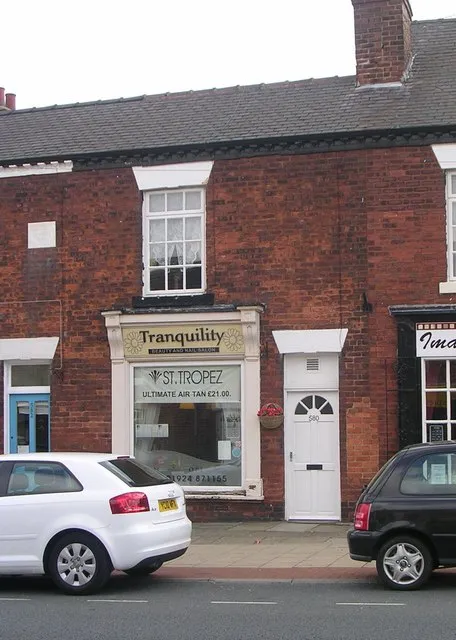
Photo: Betty Longbottom , CC BY-SA 2.0, via Wikimedia Commons
Let us talk about the £30 question. You see a salon menu in the window, a neat row of prices and a set of glossy photos, and your brain starts doing quick maths. Is that expensive? Cheap? Fair? Compared with what, exactly? The number on the menu is a headline, not a receipt. And in 2026, with so many salons, home techs and rush-job walk-ins competing for attention, it is worth understanding what is actually inside that price.
The number on the menu is only the beginning
A manicure is not one product and one pair of hands. It is a room, a chair, a lamp, a licence, insurance, training, files, buffers, cleansers, gloves, sterilisation, card fees, taxes, booking admin and time. A £30 appointment has to cover all of that before anyone earns a wage. That does not mean every £30 set is bad value. It means the price alone cannot tell you whether you are getting a thoughtful service or a rushed one. The useful question is not simply how much, but what is included and what has been left out.
Where the money goes
I would argue that the most underrated part of a manicure is the preparation. A proper consultation, cuticle work, shaping and surface prep take time. Good products cost more than the cheapest gel on the wholesale site, and proper hygiene costs money too. Sterilising tools, using fresh files and buffers where needed, and allowing enough time between clients are not glamorous upgrades. They are the basics. Skilled application also costs money because skill takes years to build. The tech who can spot a peeling nail, choose the right base and shape an apex that suits your hands is not just painting. They are solving a small structural problem while making it look easy.
The bargain that is not a bargain
We have all seen the cheap set that seems too good to pass up. Sometimes it is genuinely good. Often, though, something has been trimmed: the consultation is skipped, the prep is rushed, the same file is used too long, the removal is an afterthought or the price excludes the bits you actually need. A cheap appointment can become expensive when you pay again to fix a lifted set, soothe a damaged nail or remove a product that was never properly explained. That is the false economy. It is not about shaming anyone who needs to watch their budget. It is about being clear-eyed: the cheapest set is rarely the best value if it costs you comfort, time or nail health.
Transparent pricing is a kindness
A good salon menu should tell you what you are getting. Does the price include removal? Is a repair extra? Is there a deposit? What happens if you need to cancel? Are extensions priced separately? A transparent salon is not trying to trap you with fine print. It is trying to let you compare like with like. That kind of clarity is also friendly. It means you can budget properly, ask questions without feeling awkward and choose a service that fits your nails rather than guessing from a headline figure. In my view, transparent pricing is one of the clearest signs of a well-run local salon.
The local-salon difference
Local salons are not trying to be factories. They know your name, they remember that your left thumb always lifts and they can tell you honestly when a base is not right for your nails. That kind of care is hard to standardise and easy to undervalue. It does not mean local salons are always perfect or that cheap salons are always careless. It means value is about more than the lowest number on the high street. A friendly local salon can be competitive without being careless, and it can explain its prices without getting defensive. That is the culture worth paying for.
How to spot value without becoming a detective
You do not need to interrogate anyone. A few natural questions will tell you a lot. Is removal included? How long is the appointment? What products are being used? How are tools cleaned? What happens if a nail breaks within a week? Do they offer a patch test if you are new to a product? A good tech will welcome these questions because they show you are engaged, not difficult. If the answers are vague or defensive, that is useful information too. You are allowed to choose a salon that makes you feel confident rather than rushed.
The bottom line
The £30 manicure is not automatically a bargain, and the £45 one is not automatically a rip-off. What matters is what sits behind the price: hygiene, skill, products, time and honesty. A good manicure is a small piece of skilled, friendly care. Pay for that, and you will usually pay less in repairs, removals and regret. The cheapest set is rarely the best value if it leaves you counting the cost later.