The Sleeve Is the Swatch: Winter Nails That Start With Your Coat
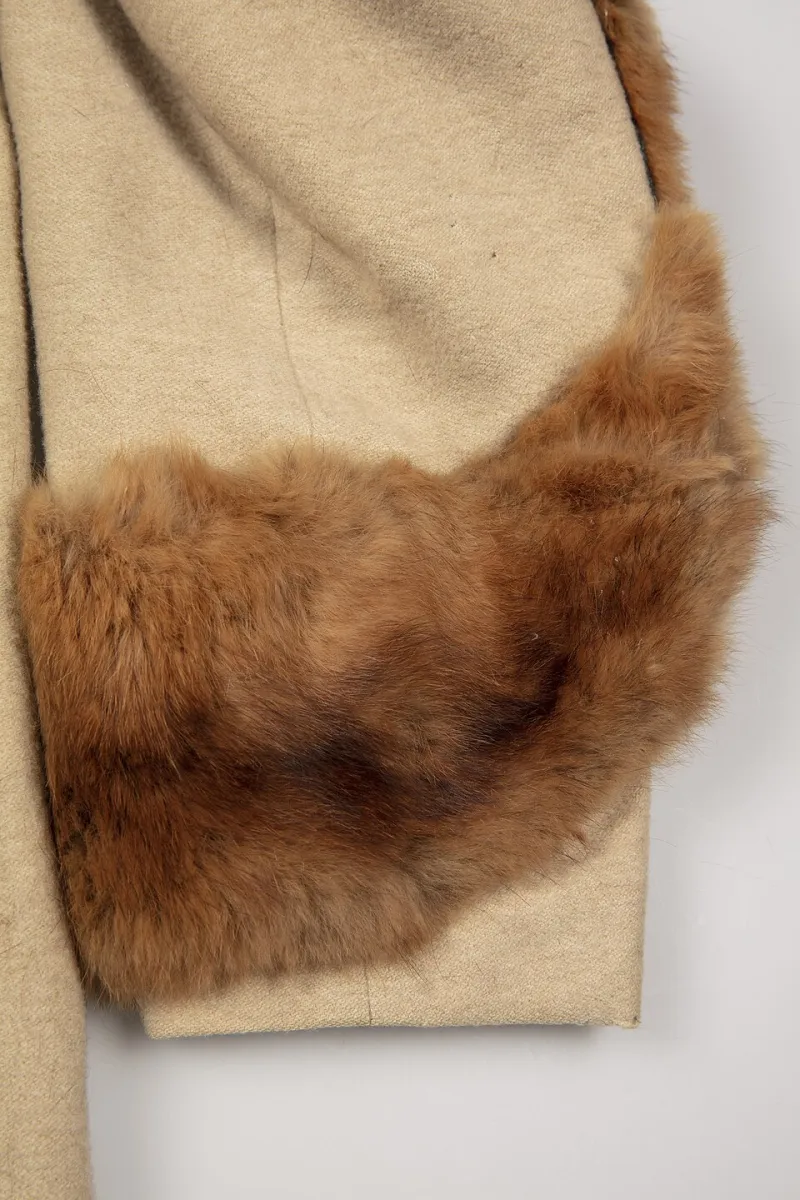
Photo: Bonwit Teller & Co, Public domain, via Wikimedia Commons
Winter nail colour usually gets chosen in the salon chair, under warm light, with a phone full of screenshots. That is a lovely way to end up with a shade you adore for about forty-eight hours and then find slightly wrong against your actual life. The better reference point is already hanging by your front door: the coat you keep reaching for.
This is not about matching your manicure to your outerwear like a set of luggage. It is about using the things you wear most as a colour brief. A wool coat, a puffer, a checked scarf and the grey-white light of a UK winter will tell you more about what suits your hands than any generic seasonal edit.
Start with the coat you reach for, not the one you wish you wore
Most of us have a coat wardrobe in theory and a coat habit in practice. There is the smart wool coat for meetings, the puffer for the school run or the walk to the station, and the scarf that lives in the tote bag from October to March. Those are your real references.
Hold a few polish options against the sleeve of the coat you wear three times a week. Not the statement coat you save for dinners. The everyday one. If the shade makes the wool look richer and your hand look rested, it is worth trying. If it makes the sleeve look dusty or the skin around your nails look tired, put it down. That is the whole test.
A camel or oatmeal coat tends to pull a manicure towards warm taupes, soft chocolate, muted brick and creamy neutrals. A black puffer is more forgiving and can carry a cooler slate, a deep plum or a near-black berry without much effort. Charcoal wool is a brilliant backdrop for soft grey-mauve or a clean, deep red. Navy likes cream, oxblood and cool metallics. Olive is happiest with bronze, moss and a soft espresso.
The point is not to collect one polish for every coat. It is to notice the colour temperature you already live in. If your outerwear is mostly cool and grey, a warm peach polish can feel like it belongs to someone else. If your coats are camel and rust, an icy silver may look stark rather than sharp.
Read the undertone in daylight, not salon light
Salon lighting is designed to make nails look glossy and skin look even. It is not always honest about how a colour will behave on a grey Tuesday. Ask to see a swatch stick or a painted nail near a window before you commit. Better still, bring your sleeve or scarf into that daylight with you.
UK winter light has a way of flattening some shades and exaggerating others. Very pale milky polishes can look chalky against cool light. Deep, saturated shades can look wonderful but show every tiny tip wear. A soft satin or creme finish often reads more expensive in flat light than a high-shine dark that only looks right under flash. None of this is a rule. It is just useful information before the first coat goes on.
If you are between two shades, do not force a favourite. Ask your nail tech which one sits better against the scarf or sleeve you have brought. A good tech will tell you honestly, and it takes less time than a full set you quietly resent.
Build a small winter palette that earns its keep
A salon-ready winter palette does not need twelve bottles. Three or four shades are plenty if they work with your coats, your jewellery and your tolerance for maintenance.
Start with one workhorse neutral: a soft taupe, greige, mushroom or creamy beige that sits close to your most-worn coat without being an exact match. This is the shade you can wear to work, to lunch and to the supermarket without thinking about it.
Add one deeper shade for contrast. Espresso, oxblood, forest, navy or a blackened berry will give you the winter polish equivalent of a good pair of boots. It looks deliberate with a puffer and smart with wool, and it survives a week of real life better than a pale shade.
Then choose one lift shade for grey days. This could be a muted berry, a slate blue, a soft chrome or a smoky lilac. It does not have to be loud. It just has to stop the palette feeling like a uniform. If your scarf has a secondary colour you love, this is where it can come in.
Finally, decide on a finish. If you wear a lot of textured wool and chunky knits, a satin or semi-matte finish can feel more modern than mirror gloss. If your coats are sleek and your jewellery is polished, high shine will feel more at home. The finish is part of the palette, not an afterthought.
Use the scarf as your shortcut brief
A checked scarf is a ready-made colour consultation. Look at the smallest stripe, not just the dominant colour. That secondary thread is often the shade that makes the whole thing sing, and it can be a surprisingly good nail colour. A burgundy check may have a thin line of cream or forest green. A grey check may carry a soft pink or a cool blue.
If the scarf is very busy, keep the nails quieter. If the scarf is plain, let the nails take a little more texture or depth. The same logic works with a puffer: a glossy black coat can handle a rich, dark manicure; a matte olive puffer looks lovely with a softer, stone-toned nail.
How to brief your nail tech with a sleeve
Bring the coat sleeve or scarf with you, or take a photo in daylight and show it at the start of the appointment. Say what you like about it: the warmth, the depth, the contrast, the coolness. Do not just say match this. A good brief sounds like, I want a neutral that sits with this camel wool, or I want a deep shade that works with this navy without looking black.
Ask for a dry swatch against the sleeve before your nails are prepped. If your tech offers it, paint one nail and step towards the window. It is a small pause that saves a whole appointment of second-guessing.
And keep the palette small. The best winter nail wardrobe is not the one that photographs well on a mood board. It is the one that still feels like you when you are pulling on gloves, queuing for a train and trying to find your keys in the bottom of a bag. Your coat already knows the answer. The salon just helps you finish the sentence.