The Whole-Hand Rule: Why One Painted Nail Rarely Tells the Truth About a Colour

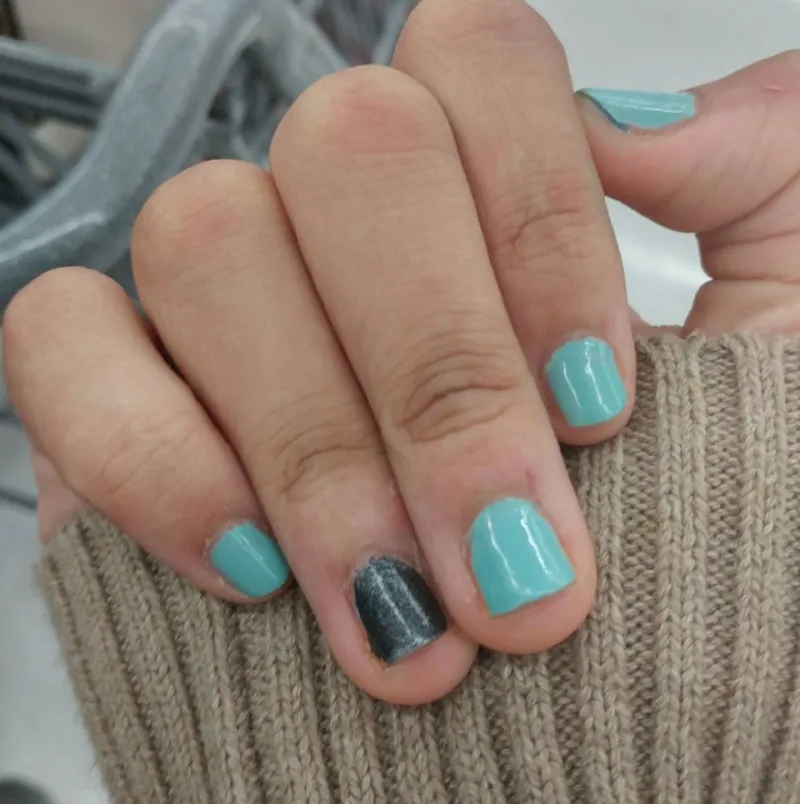
Photo: Basile Morin, CC BY-SA 4.0, via Wikimedia Commons
You know the moment. The swatch stick looked promising. The bottle was lovely. Your tech paints one nail, and something is slightly off. Not wrong, exactly — just not what you pictured. And because it's only one nail, you can't quite tell whether it's the colour, the light, or your own eyes playing tricks.
That's the trouble with the one-nail test. It gives you a glimpse, not the full story.
At Lily Nail Stanning, we're all for trying before you commit. But a single painted nail is a poor preview of a full set. Colour behaves differently when it's repeated across ten nails, when it sits next to your other fingers, when it catches the flat grey light of a British winter, and when it's viewed under the warm glow of salon bulbs. If you've ever loved a shade on one nail and quietly resented it across a full hand, you'll know exactly what we mean.
The one-nail illusion
A lone painted nail is an island. It has no context. Your eye reads it in isolation, against a small patch of skin, and often in whatever light happens to be falling on that one finger at that one moment. It can look brighter, deeper, more flattering or more muted than it will once every nail is wearing it.
There's also the contrast effect. One bold nail against nine bare ones can feel like a statement. Ten bold nails can feel like a completely different mood. A soft nude that looks elegant on a single finger can become invisible across a whole hand. A rich berry that seems sophisticated on one nail can turn heavy when repeated. None of this is bad — it's just information you don't get from a single swatch.
Light is the biggest variable in the room
If you live in the UK, you already know that winter light is its own character. From November through February, daylight can be flat, cool and strangely blue-grey. It doesn't flatter everything, and it certainly doesn't show colour the way a bright summer afternoon would.
Then you step into a salon. The bulbs are warmer, the ambience is cosier, and suddenly that shade you chose by the window looks richer and more golden. Neither view is wrong. They're just different versions of the same colour.
The real test is seeing your nails in more than one light before the gel goes on. A polish that only works under salon lighting is a polish you might fall out of love with by the time you reach the bus stop.
Undertones, overtones and the ten-nail effect
Colour doesn't sit on your nails in a vacuum. It interacts with your skin tone, the natural pigment of your nail bed, and the other nine nails beside it. Cool undertones can pull a shade in one direction; warm undertones can pull it in another. A colour that looks balanced on one finger can suddenly feel too yellow, too grey, too pink or too sharp when it's repeated across the whole hand.
This is why the full-hand test matters. It lets you see the colour as a collection, not a sample. You get to notice whether it makes your hands look alive or washed out, whether it competes with your rings, whether it feels like you or like a costume.
A practical in-salon testing routine
You don't need a lengthy consultation to test a colour properly. You just need a few minutes and a tech who's happy to help. Here's the routine we'd recommend.
1. Shortlist before you sit down. Bring inspiration if you like, but narrow it to two or three shades. Too many options muddy the water.
2. Ask for a five-nail trial. Rather than one nail, ask your tech to paint all five nails on one hand. That's enough to show you how the colour behaves as a set without committing to a full ten-nail removal if you change your mind.
3. View it in three lights. Look at your hand by the window in natural daylight. Then look under the salon bulbs. Then, if you can, step into a different room or look at your hand in the mirror from arm's length. Three views will tell you more than thirty seconds under one lamp.
4. Live with it for twenty minutes. Have a cup of tea. Scroll your phone. Open and close your hand. See how the colour feels when you're not staring at it. Sometimes the right shade is the one you forget you're wearing.
5. Decide, then commit. If you're still happy after the trial, go ahead with the full set. If something nags at you, say so. A good tech would much rather remove five nails than watch you spend the next fortnight pretending to love a colour.
When the one-nail rule might be fine
There are exceptions. If you're choosing a sheer tint or a barely-there nude, a single nail can give you a reasonable sense of the finish. If you're planning intricate nail art, your tech may suggest testing the base colour on one nail before building the design. But for a solid, saturated shade — the kind you'll wear for two or three weeks — the full-hand test is worth the extra few minutes.
Confidence looks better than regret
A manicure should feel like a treat, not a gamble. Testing a colour across a whole hand is a small step that makes a big difference. It's not about being fussy. It's about giving yourself the chance to see what you're actually getting, in the light you actually live in.
So next time you're drawn to a shade on a swatch stick, ask for a little more. Paint the hand. Check the window. Check the bulbs. Then choose with your eyes open. Your future self — the one who has to look at those nails for the next fortnight — will thank you.